Sleep apnea is classified into three types: obstructive, central, and mixed, with obstructive type being the most common.
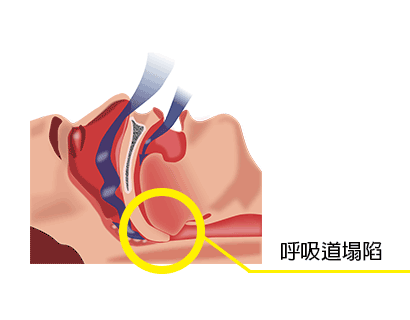
During sleep, muscle tone decreases, causing...Airway obstruction,andproducing snoringIn severe cases, it can lead toBreathing air cannot enter the lungsA decrease in blood oxygen concentration causedBreathing arrest or even suffocationPhenomenon.
This can happen dozens to hundreds of times a night, and patients may not be aware of it. Because of the intermittent sleep and poor sleep quality, patients often feel sleepy, lethargic, and unable to concentrate during the day, which in turn affects their work and daily life quality.
Obstructive sleep apnea
Some people snore because the muscles of their upper airway lose their original tension or due to the structure of the upper airway. The friction sound caused by the air passing through the narrowed airway is called "snoring." In severe cases, the airway can collapse and become blocked, preventing air from entering the lungs and causing breathing to stop for more than 10 seconds, or a decrease in airflow of 50 lb/3T, accompanied by a decrease in blood oxygen concentration of 4 lb/3T. This is obstructive sleep apnea (OSA). Patients with OSA usually snore while sleeping, and their breathing is intermittent, with each pause lasting more than 10 seconds. In severe cases, breathing may stop dozens of times per hour, causing a sharp drop in blood oxygen concentration.
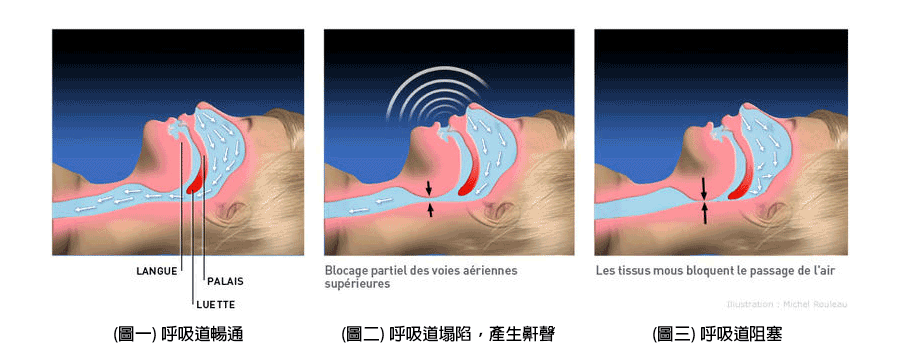
Because the brain is stimulated by oxygen deprivation, it triggers a self-protective arousal mechanism, thus repeating the following throughout the night:
Falling asleep → Snoring → Breathing cessation → Oxygen deprivation → Light sleep or awakening →
Falling asleep → snoring → breathing cessation → oxygen deprivation → light sleep or awakening…
Because of the cyclical nature of sleep, no matter how long you sleep, you will still feel tired, have poor energy during the day, be prone to drowsiness, have difficulty concentrating, and may even cause workplace or traffic accidents.
According to the American Academy of Sleep Medicine's classification criteria for the severity of obstructive sleep apnea, each instance of apnea or weakened breathing lasting more than 10 seconds accompanied by a drop in blood oxygen saturation is recorded. A respiratory apnea or weakening index of less than 5 times per hour is considered normal, 5 to 15 times per hour is mild, 15 to 30 times per hour is moderate, and more than 30 times per hour is severe. In other words,Normal people may occasionally experience sleep apnea during sleep, but if the number of apnea episodes per hour is greater than 5, it is considered a medical condition that requires active treatment, otherwise it may lead to sequelae.
Who is prone to obstructive sleep apnea?
Clinical manifestations of sleep apnea
Obstructive sleep apnea-related diseases
Immediate impact
Long-term effects
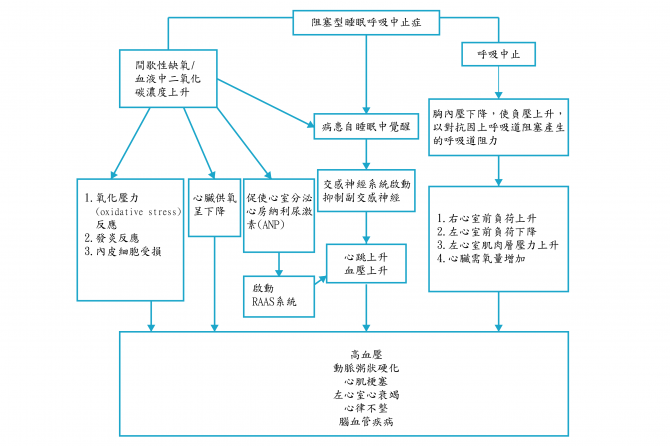
How does obstructive sleep apnea cause cardiovascular disease?